Growing food has always been a passion of mine. I can’t explain why. I can’t say it’s because of how I was raised, because I have three siblings who do not feel the same way. But I do know that how I was raised sure did affect me!
I have thousands of beautiful memories of growing up on a farm. One of those memories is sitting high in the branches of a pear tree, eating a juicy, tree-ripened pear in the dappled sunshine, the lawn below catching the drips that ran down my chin when I missed wiping them with the back of my hand. All while watching my mother through the kitchen window of our 1900s farmhouse as she prepared dinner and Dad drove home from work.

Fruit trees used to be a simple part of ordinary family life, and not just in the country, either. Trees in the lawn provided shade, beauty, climbing branches, spying hideouts for adventurous children, and food for the songbirds who brought melody to the morning light.
They provided food, of course. But they also provided something harder to find these days. A reason to knock on a neighbor’s door with a basket of pears and return home with a pie plate full of cherries. A reason to share a harvest, swap recipes, and feel connected to the people around us.
We’ve lost so much of that community, self-reliance, and simple beauty.
Life got a lot busier. Yards have become smaller. Riding tractors have replaced the little whirling swish-swish of push mower blades beneath the summer leaves. We have gone from average houses with average yards to mega-sized homes with manicured park-like settings, and now we often find ourselves squeezed into smaller homes, smaller yards, and smaller wallets.
But people are beginning to feel the loss. Keenly, in so many ways.
So, what do you do? Growing fruit takes an orchard, right? It takes land, it takes space—all things that are becoming increasingly hard to come by, right?
Nope. It doesn’t take all that.
You can raise your own fruit in your own space, no matter how small, even if all you have is a patio, a balcony, a narrow side yard, or a sunny sidewalk. You can grow fruit for yourself and your family.
I once took my youngest child on a field trip to the grocery store. I had him write down the prices of the fruits and vegetables that we grew ourselves. Back at home, he calculated how much money it would have cost to buy everything we had produced that year.
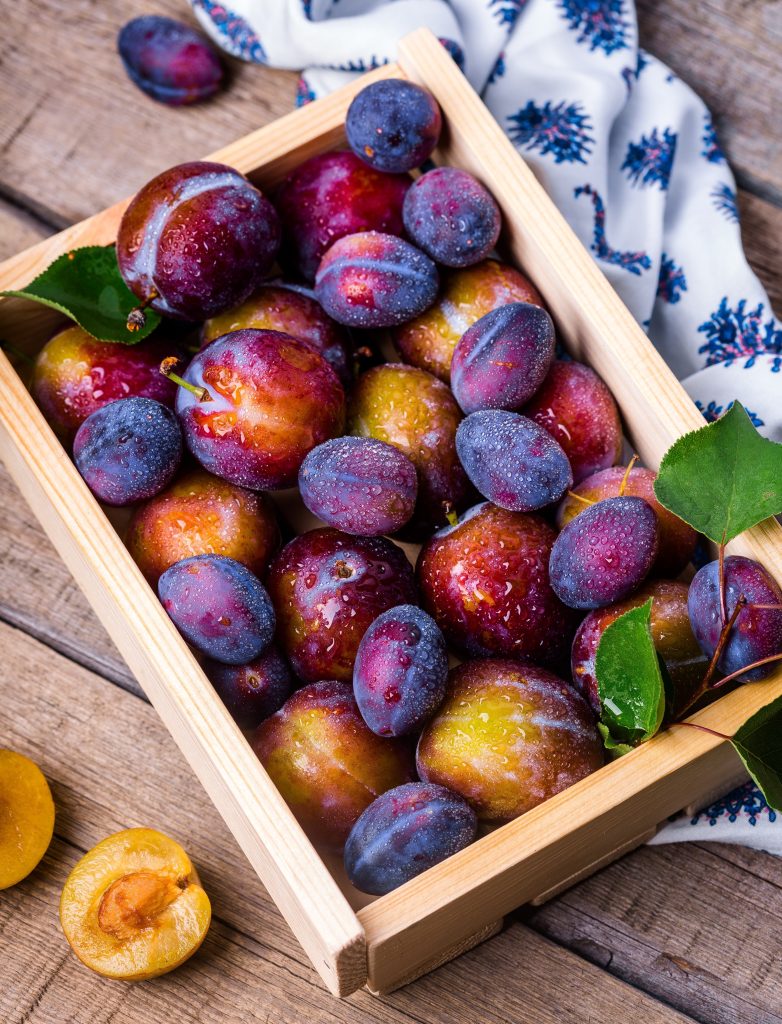
It was the first time he truly understood the value of growing things for yourself.
If you grow anything, take that field trip and see what value your work is already producing. You’ll be pretty darned proud of yourself and your little patch of earth!
Speaking of little patches of earth, some have more, some have less. But most have something they can utilize.
This could be an entire book, but I’m going to keep this to a short overview and go into these topics more in depth as time goes on.
Let’s talk options!
Grow Fruit in Containers
One of the easiest ways to begin producing fruit in a small space is with containers. Patios, balconies, porches, sidewalks, and even sunny apartment corners can become productive growing areas.
Look for dwarf and compact varieties whenever possible.
Good container choices include:
Easy Berries
- Strawberries
- Blueberries
- Currants
- Gooseberries
- Lingonberries
Berries That Need Support
- Raspberries
- Blackberries
Fruit Trees for Containers
- Mulberries
- Dwarf apples
- Dwarf pears
- Dwarf peaches
- Dwarf plums
- Dwarf apricots
- Dwarf nectarines
Trees That May Need Winter Protection
- Figs
- Lemons
- Limes
- Oranges
You can even grow smaller melons on trellises and experiment with fruiting vegetables such as tomatoes and tomatillos.
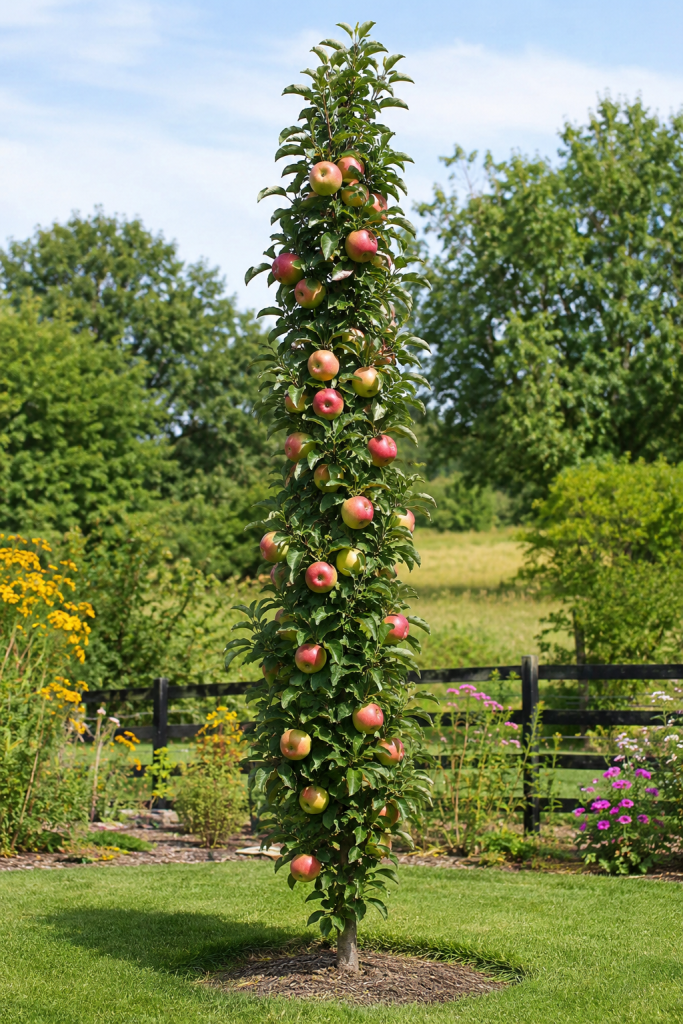
Choose Columnar Fruit Trees
Did you know that growers have been developing columnar fruit trees for years?
These unusual trees stay remarkably narrow, producing full-sized fruit while taking up very little space. They are ideal for patios, narrow side yards, walkways, and fence lines.
They require relatively little pruning and can serve as attractive landscape accents while still providing a harvest.
For people who think they don’t have room for a fruit tree, columnar varieties may be the perfect solution.
Train Trees as Espaliers
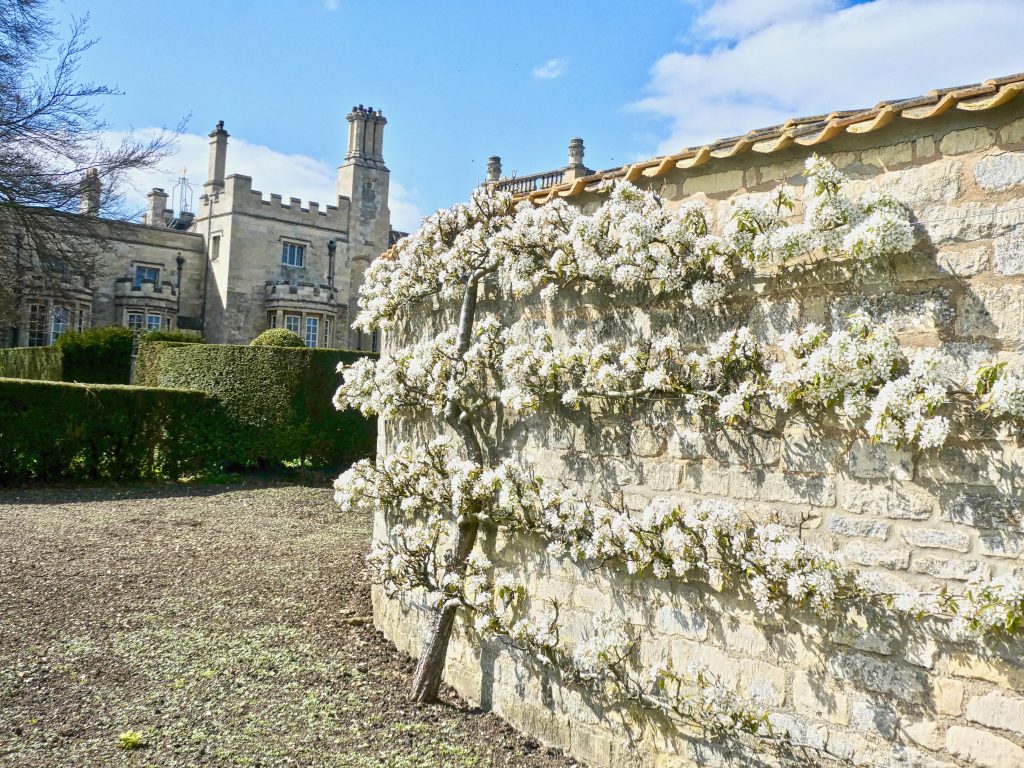
Think of an espalier as a cross between a vineyard and a bonsai tree.
Young fruit trees are trained along wires and carefully pruned into elegant, flat forms. The result is a productive fruit tree that takes up only a fraction of the space of a traditional tree.
Espalier growing does require some patience and regular attention, but many gardeners find the process relaxing and rewarding.
If you enjoy slow, methodical gardening and like the idea of harvesting fruit at arm’s reach, espalier trees might become one of your favorite projects.
Grow Dwarf Fruit Trees
Most people don’t realize just how many fruit trees are available in dwarf varieties.
Dwarf trees are created by grafting desirable fruit varieties onto rootstock that naturally limits the tree’s size. The result is a tree that produces normal-sized fruit on a much smaller plant.
Many dwarf trees can be maintained at a height where harvesting requires little more than standing on the ground.
When shopping for fruit trees, look specifically for dwarf or compact varieties if space is limited.
Try Fruit Cocktail Trees
People get very clever when experimenting with plants, and I love it.
Fruit cocktail trees are single trees that have multiple varieties grafted onto one trunk. You can find apple trees that produce several different apple varieties, or trees that produce combinations of peaches, plums, apricots, and other stone fruits.
Not only do they save space, but they also make wonderful conversation pieces when visitors stop by.
One planting hole. Several kinds of fruit.
That’s a pretty good deal.
Plant Multiple Trees Together
If fruit cocktail trees aren’t available, you can create a similar effect yourself.
Some gardeners plant several compatible fruit trees in the same planting area and manage them as a group. Over time, the trees grow together, creating what appears to be a single larger planting.
The key is keeping them pruned to similar sizes.
Otherwise, one tree will surely take command of the situation the first chance it gets.
Grow Along Fences and Railings
Many gardeners overlook vertical spaces.
Fences, deck railings, balcony railings, and garden walls can all support productive plants.
Grapes, blackberries, raspberries, hardy kiwi, and certain melons can all make use of space that would otherwise go unused.
Instead of thinking only about square footage, start thinking about cubic footage.
Layer Your Fruit Production
Nature rarely grows in a single layer.
A fruit tree can occupy the upper level of a planting while berry bushes grow beneath it and strawberries spread along the ground below.
When plants are chosen carefully, one space can produce far more food than most people expect.
Some fruits even appreciate a bit of shade from larger plants, making layered growing a useful strategy for small properties.
Look Beyond Traditional Orchards
Many people hear the word “orchard” and imagine acres of land.
In reality, a productive fruit garden might consist of a blueberry bush by the porch, a dwarf pear tree near the driveway, strawberries along a border, and grapes on a fence.
Small harvests add up surprisingly quickly.
Start With One Plant
The biggest mistake people make is believing they need to do everything at once.
You don’t.
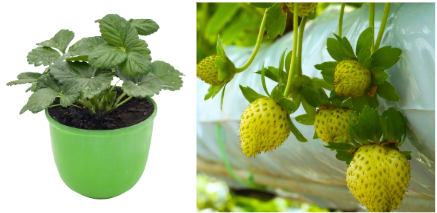
Start with one blueberry bush.
Or one strawberry planter.
Pssst…. You can even just plant them into a bag of potting soil.
Or one dwarf apple tree.
A year from now, you’ll be glad you planted something.
And who knows? You may find yourself sitting beneath a fruit tree someday, watching the sunlight filter through the leaves and wondering why you didn’t start sooner.
Thank you for stopping by and visiting!
May your home always find something beautiful to bloom.
Leave a Reply